2026 Guide: How Much Does Car Window Tinting Cost in the US ?
Window tinting prices vary widely based on vehicle size, film quality, installer, and location. Nationwide averages show about $100–$150 for a two-front-window job, $200–$400 for a full sedan, and $250–$500+ for larger SUVs/trucks (basic films). Premium ceramic or multi-layer films can double those ranges. In addition to base fees, add-ons like a windshield sun strip ($50–$100), full windshield tint ($150–$250), sunroof tint ($50–$200), or removal of old tint ($50–$150) will increase costs. State laws heavily restrict tint darkness: for example, front-side VLT (visible light transmission) minimums range from 70% in New York to as low as 20–25% in NM, FL, TX, and AZ. Many states allow any darkness on rear windows and only a non-reflective strip above the windshield. Premium brands (3M, LLumar, XPEL, Autobahn) often back window tint with lifetime warranties, while cheap films fade and bubble within 1–3 years. average cost of window tinting car USA
VISIT NOW
Introduction & Cost Overview
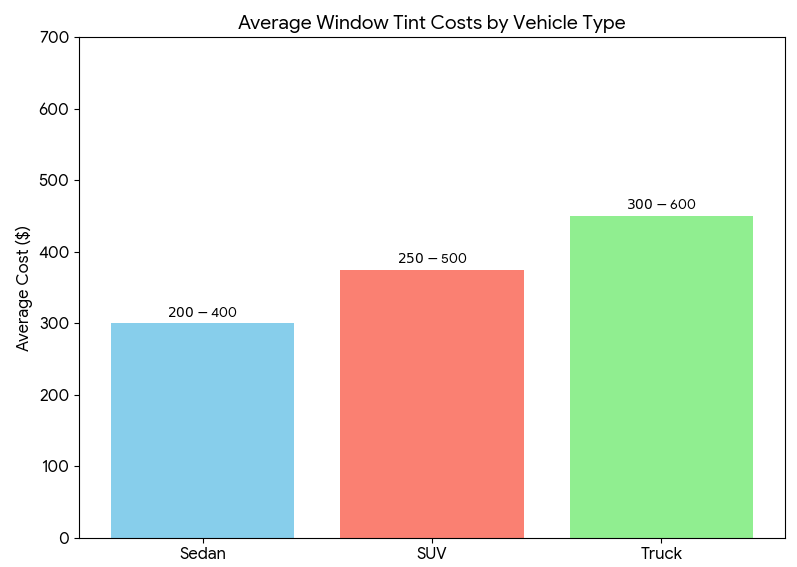
Auto window tint jobs generally run from $100 to $800+, varying by scope. For a small sedan, professional tinting typically costs $200–$400 for a full set of side and rear windows, whereas large SUVs/trucks are about $250–$500. A minimalist job (driver/passenger front windows only) averages $80–$150. Premium ceramic films can add hundreds more “Premium ceramic tint: $400–$800+”. These ranges assume quality films and certified installers. Factors driving price include vehicle size (glass area/labor), film technology (see below), shop experience, and local market. Some shops advertise very low prices (e.g. “$99 full car”), but these often use cheap films with no warranty. By contrast, dealers specializing in high-end films (3M, XPEL, Llumar) may charge top dollar—often 20–30% above average & auto window tinting cost near me USA .
Key Points: Most drivers pay in the middle of ranges above, while all-inclusive glass packages (including windshield strips) can reach $600–$900 for luxury cars or vans. Cost per window drops as more windows are tinted (bulk). For example, Orleans Auto Club (Louisiana) lists a full sedan at ~$299, full SUV $349, but just two front windows at ~$139. Similarly, a local Nevada shop reports full ceramic tint $400–1,000 (depending on detail). Shop quotes should be compared in person, as labors and tax/local prices vary.
Pricing by Vehicle Type: Larger vehicles need more film and time. Sedans (4‑door cars) typically cost $200–$400 for full side+rear tint. SUVs and trucks average $250–$500 for a full job. Luxury models or vans with extra glass can go above these (Orleans notes large vans/SUVs ~$419). Two-window jobs (front doors only) are cheapest: about $80–$150. As an example, two front windows on an SUV might be $159. Windshield tint is often separate: a sun-strip at top costs roughly $50–$100, while full windshield tint (legal only above AS-1 line in most states) is $150–$250 & ceramic window tint cost USA .
-
Vehicle Type Typical Cost (standard film) Premium/Ceramic
-
Sedan (full) $200–$400 $400–$800
-
SUV/Truck (full) $250–$500 $400–$900
-
2 Front Windows $80–$150 $125–$250
-
Windshield Strip $50–$100 $ (often same film)
-
Full Windshield $150–$250 $200–$300
Pricing by Film Type
- Dyed (Basic): Least expensive (~$100–$300 per car). Pros: good privacy, low cost. Cons: poor heat rejection, color may fade (often purple).
- Metalized: Mid-range (~$200–$400). Contains metallic particles, so Reflects heat/UV much better than dyed. Pros: durability, clear view (some give a slight mirror tint). Cons: can interfere with radio/GPS, slightly more costly.
- Carbon: (~$250–$500 for full car) – Carbon film has matte finish. Pros: Excellent heat and UV blocking, no signal interference, no fade. Cons: higher price; can still be darker in appearance.
- Hybrid: Combines dye + metal layers. Balanced cost/performance; better heat rejection than dyed, no radio issues like metal. Often $300–$600 (varies).
- Ceramic (Premium): (Most expensive) ~$400–$800+. Pros: top-tier heat/UV rejection (blocks ~99% UV), no signal interference, permanent clarity. Diamond Garage notes Autobahn ceramic can yield 10+ years of fade-free performance. Cons: high cost, slightly hazy at night.
National Chain vs Local Shop Pricing :
Major chains (e.g. Tint World, Glass America, regional auto-clubs) tend to offer package pricing and may use slightly lower-tier films for budget packages. For instance, Tint World advertises full-sedan tint from $100–$400 and SUV tint $200–$600. These ranges overlap local rates – Orleans Auto Club (independent shop) quotes ~$299 for a sedan and ~$349 for an SUV. Key differences: chains often publish broad “starter” prices but may up-charge for premium films and thicker vehicles. Independent shops can be cheaper on basic jobs (DIY kits aside) but vary by region.
State Tint Laws Summary :
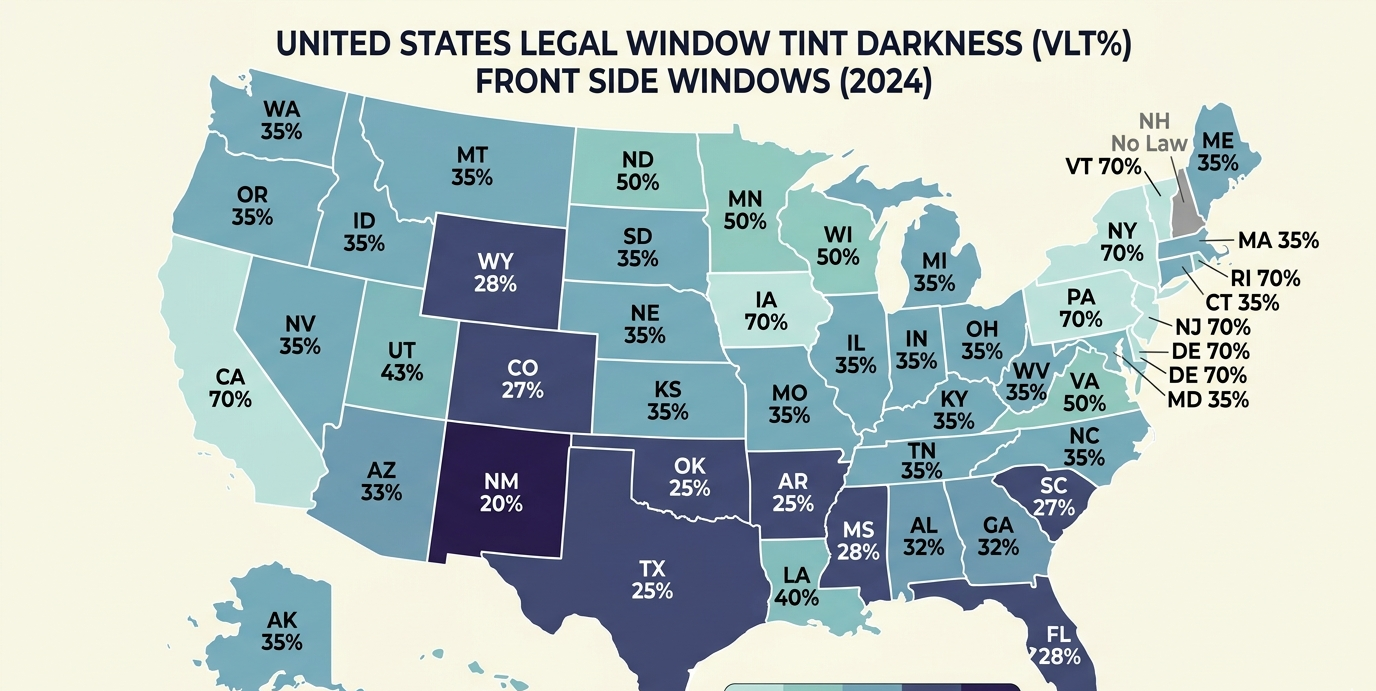
U.S. tint regulations vary widely. Most states set a minimum VLT% (how much light must pass). The strictest front-side limits are 70% (NY, RI); the darkest allowed are 20–28% (NM 20%, TX/AZ/FL 25%, OK 25%). Many states allow “any darkness” on rear side/rear windows (with dual mirrors). All states allow a non-reflective sun strip on the windshield (typically 4–5” from top). Reflectivity limits (max mirror finish) also apply in ~25 states (e.g. CA≤normal glass reflectivity). Some states outright ban aftermarket tint on front windows (NH, NJ prohibit any front tint).
Law Highlights :
- California: Front ≥70% VLT; rear ANY darkness; windshield strip ≤4″.
- Florida: Front ≥28%; rear ≥15%; windshield any non-reflective above AS-1 line.
- New York: Front ≥70%; rear ANY; windshield strip 6″; no mirrors needed.
- Texas: Front ≥25%; rear ANY; windshield ≤5″; reflective ≤25%.
Additional Services & Fees
Common add-ons include: Windshield tint (sun strip ~$50–$100, full windshield $150–$250), sunroof tinting ($50–$200), and headlight tint/covering (varies, ~$50+). Removing old tint costs ~$50–$150. Extended warranties (often +10–15% of total) can be offered. Mobile installation (technician comes to you) usually costs an extra $50–$100. Chart below summarizes key add-ons:
- Windshield sunstrip: ~$50–$100
- Full windshield tint: ~$150–$250
- Sunroof tint: ~$50–$200
- Old tint removal: ~$50–$150
- Extended warranty: +10–15% of job cost
- Mobile service fee: +$50–$100
Warranty, Lifespan & Maintenance
High-quality films last 5–10 years on average. Premium ceramic films often exceed 10 years, whereas cheap dyed films can fade within 1–2 years. Many installers offer lifetime warranties on premium films (covering peeling, bubbling, fading) if professionally installed. For example, Autobahn ceramic films carry a no-fault lifetime warranty. Maintenance is minimal: avoid abrasive cleaners, use ammonia-free glass cleaner, and let any steam or heat from defrosters clear slowly to prevent film lifting.
Frequently Asked Questions:
- How long does car window tint last? High-quality tint typically lasts 5–10 years. Ceramic films often exceed 10 years, whereas cheap dyed films may begin to fade or bubble in a year or two.
- What is legal window tint darkness? It depends on the state (see table above). For most US states, front side windows must allow at least 30–70% light (e.g. 70% in CA/NY, 25–28% in FL/NM/TX). Rear windows are often “any darkness,” but check your state law. Windshield tint is usually allowed only as a top strip.
- Can I DIY window tint to save money? DIY kits (static-cling films) cost ~$50–$150 but risk bubbles or poor fit. Professional jobs ($200+) ensure clean installation. For a warranty and optimal appearance, professional install is recommended.
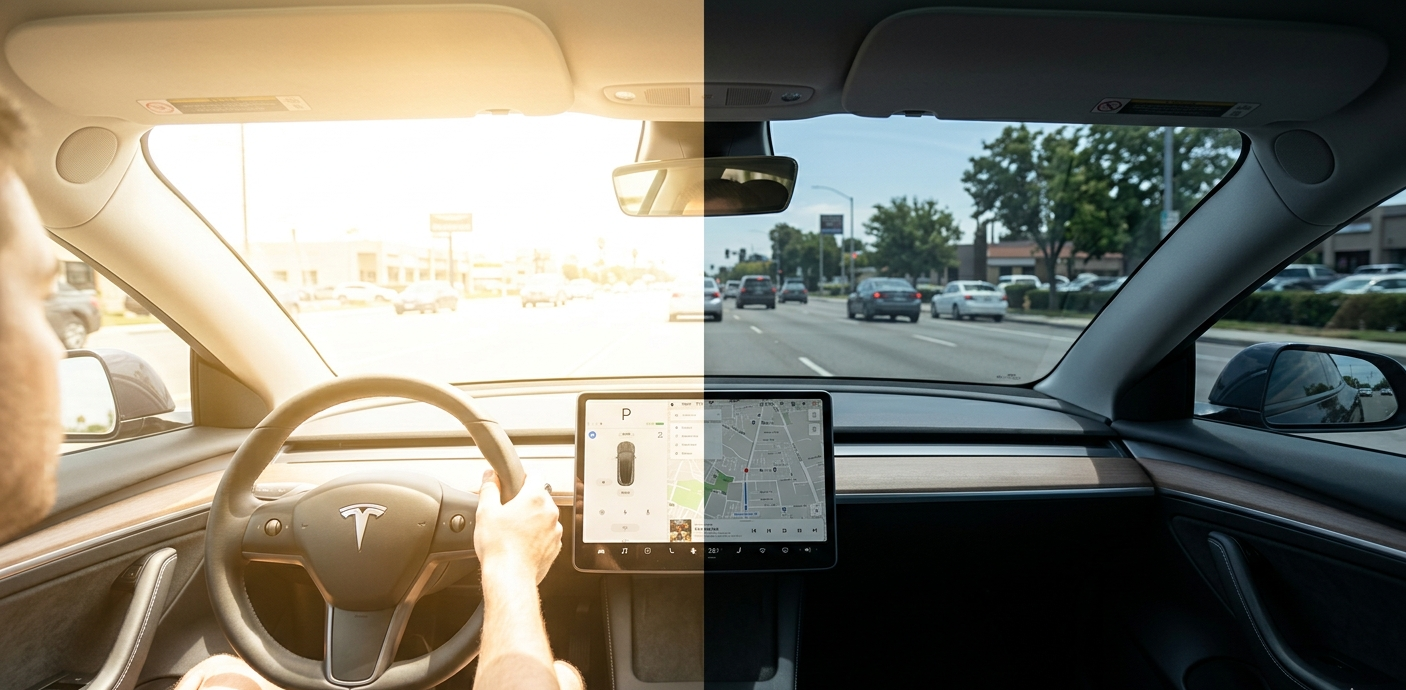
- Do tinted windows reduce AC load and UV exposure? Yes. Quality tints can block up to 99% of UV rays and 60–90% of solar heat, reducing interior temperature and sun damage. Ceramic tints in particular cut infrared heat (the type you feel) dramatically.
- Is a windshield sun strip worth it? A small windshield strip ($50–$100) can cut glare without affecting visibility. It is legal in most states as a non-reflective band. A full windshield film is more costly ($150–$250) and subject to strict state rules.
- How much does ceramic tint cost compared to dye? Ceramic costs 2–3× more. Expect $400–$800+ for a full-car ceramic job vs. $100–$300 for dyed. Many installers charge “premium” rates ($500–$1,000+) for high-end multilayer ceramic.
- Does warranty cover UV fading? Most lifetime warranties cover “no-fade” claims, meaning if film discolors, you get free replacement. However, warranties usually apply only to reputable branded films installed by certified dealers.
- Will dark tint set off the cops? If your tint obeys your state’s limits, you should be fine. Illegal tint (darker than law permits) can result in a ticket ($50–$200 fine). Always carry a compliance certificate if your shop provides one.
- Is window tinting worth the cost? For many drivers: yes. Benefits include reduced interior heat, UV protection, glare reduction, privacy, and aesthetics. The investment (often <1% of car’s value) can pay off in comfort and preserving upholstery. Choose quality film and installer for best ROI.
- What about windshield tint in cold climates? Tint film can withstand cold; some drivers find heaters defrost tinted windshields equally well. Ensure chosen film is automotive grade and rated for your climate.
VISIT FOR MORE CARS INFORMATIONS AND UPDATES